Steel, water & moving loads
Account for antenna height, line of sight, shadowing and changing orientation. Enclosure sealing does not establish wireless propagation.
LOAD AT A DISTANCE. DATA IN REACH.
From a crane tension link to a wired sensor retrofit, bring force measurements to the operator, PLC or PC — without a trailing signal cable.
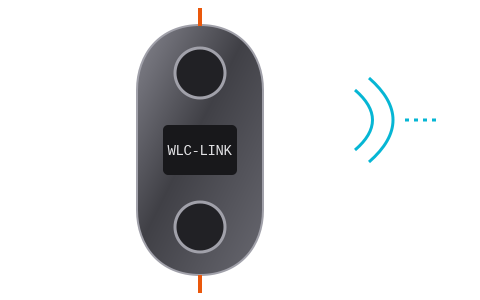 WLC-LINK
Concept schematics. RF range, protocol, latency and receiver functions require configuration review.
Sensor + radio protocol + receiver + data output. A shared frequency alone does not establish compatibility.
SENSE / TRANSMIT / RECEIVE
Choose a complete wireless sensor or retain your existing strain-gauge load cell. Receiving hardware is part of the system from the first enquiry.
WLC-LINK / OVERHEAD RIGGING
Read the load from a practical position away from the lifting connection. Specify the tension link, rated rigging and radio receiver together.
Review the system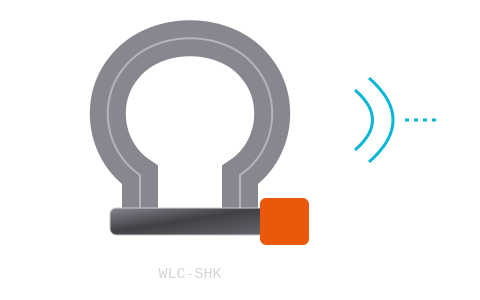
WLC-SHK + WLC-PAD / MULTIPOINT
Measure at a shackle connection or collect loads beneath a heavy module. Pair the sensor arrangement with the right channel count and logging method.
Review the system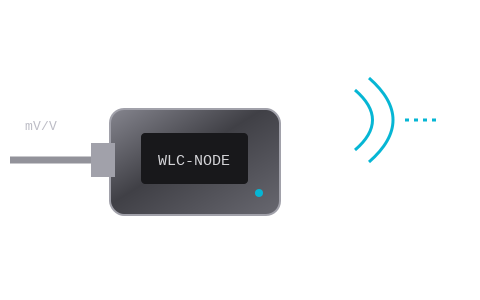
WLC-NODE / RETROFIT TELEMETRY
Keep the existing strain-gauge load cell. Review a battery-powered wireless bridge node and matched receiver for the signal chain you already have.
Review the system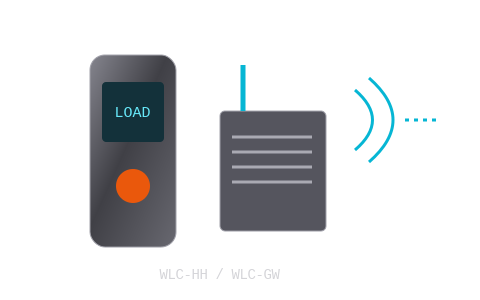
WLC-HH + WLC-GW / RECEIVE & INTEGRATE
Bring wireless measurements to an operator, a PLC or a PC. Define the data destination before selecting a receiver and its output modules.
Review the system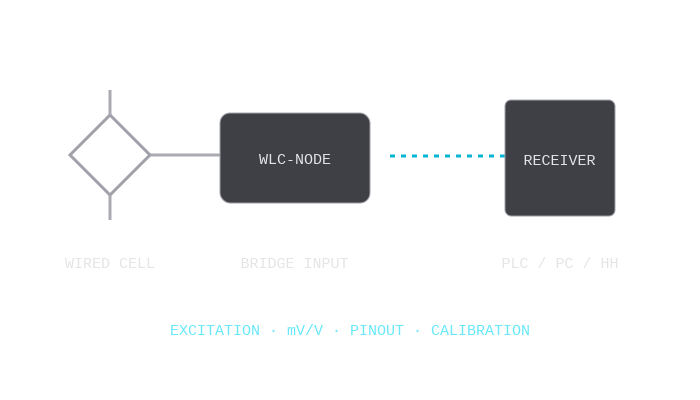
THE SENSOR YOU ALREADY OWN
A WLC-NODE retrofit begins with your bridge sensitivity, excitation and wiring. Review cable or M12 connections, battery duty and receiver output before replacing the mechanical sensor.
Review a wireless retrofitRADIO DESIGN IS PART OF THE JOB
Account for antenna height, line of sight, shadowing and changing orientation. Enclosure sealing does not establish wireless propagation.
Define channel count, latency and reporting interval. Long-range Sub-GHz links need a data and battery budget.
Select the market before the radio. Power, antenna, equipment approvals and regional access rules still apply.
CONFIGURE / PAIR / REQUEST
Build a measurement chain for review. We will confirm the sensor rating, RF path and compatible receiving hardware in the quotation.
[email protected]Send drawings by email. No immediate price or radio approval is implied by this selector.